There was a time, not so long ago, when a man's word was worth more than many signatures. A handshake was enough. A commitment made stood, in itself, as a moral obligation. There was no need to surround every promise with clauses, notifications, or warnings, because there existed a deep sense of honor, of duty, and of responsibility. That time seems today to belong to another era. We live in a society where much is signed and little is kept. Contracts, regulations, and procedures multiply, yet the essential element too often fades: character. Everything is relativized. Everything is justified. Everything is reinterpreted in the light of the convenience of the moment.
Yet a society without a word is a society without a backbone.
The word given is not a relic of the past. It remains the first contract of any truly civilized community. It is what distinguishes the man of integrity from the opportunist, the responsible citizen from the irresponsible one, the public servant from the careerist. Whoever promises and does not deliver loses far more than credibility: he loses dignity.
The generations that came before us understood this truth better than we do. Honor was not taught in speeches; it was practiced daily. One worked with dedication, one respected one's elders, one supported the family, one honored the commitments assumed, and one allowed conduct to speak louder than any public proclamation.
Portugal has known men whose word carried true moral weight. Nuno Álvares Pereira, the greatest example of loyalty, courage, and service to the Pátria. Mouzinho de Albuquerque, a paradigm of discipline and sense of mission. Humberto Delgado, who confronted power with rare frankness. Salgueiro Maia, whose serenity and sense of responsibility marked one of the decisive moments of our History. Aristides de Sousa Mendes, who chose to obey his conscience rather than convenience. Francisco Sá Carneiro, whose firmness of conviction continues to inspire successive generations.
To these are joined thousands of military men, guards, police officers, magistrates, teachers, entrepreneurs, and public servants who, far from the spotlight, made of the word given an obligation of conscience.
Different men, in different eras, but united by one and the same virtue: when they gave their word, it had value.
It is precisely that value which seems to grow scarce today.
We constantly speak of values, yet we often live without discipline. Rights are demanded, duties are forgotten. Liberty is invoked, but responsibility is rejected. Justice is claimed, but only when it serves one's own interests. The word given has become the victim of a culture that trivializes commitment and normalizes the absence of coherence.
It is no surprise, then, that so many institutions have lost their authority.
The family weakens when the word of the parents ceases to be respected. The school weakens when discipline is confused with oppression. Politics degrades itself when the electoral promise ceases to constitute a moral commitment. Friendship dissolves when loyalty lasts only as long as convenience endures.
Everything begins with the word.
Before the written law there is conscience. Before the courts there is honor. Before the signature there is personal responsibility. When these realities disappear, no legislation, however extensive, will be able to prevent the moral decay of a society.
Portugal was built by generations of simple men and women, often without great academic instruction, but endowed with a solid moral formation. They had few material goods, but possessed richness of character. They were poor in patrimony, but rich in honor. Today, unfortunately, we too often witness the opposite: abundance of words and scarcity of principles.
No family, no company, no nation, and no civilization is built upon the convenient lie, the permanent excuse, or the disposable commitment. They are built upon loyalty, discipline, respect, and honor.
Material progress, on its own, will never be enough. We may have more technology, more comfort, and more information. Yet if we lose respect for the promise made, if we cease to feel shame for failing to keep our word, we will not be progressing. We will merely be modernizing decadence.
It is urgent to return to the essential.
To teach our children that a promise binds. To teach the young that liberty demands responsibility. To teach public figures that to serve is more important than to appear. To teach entrepreneurs that trust is worth more than any immediate gain. To teach the whole of society that the word given continues to be one of the highest expressions of moral nobility.
This is not nostalgia. It is civilizational survival.
When no one believes in anyone's word, distrust inevitably sets in. The family distrusts, companies distrust, citizens distrust, and even the State distrusts. And a society built upon permanent distrust ends up inevitably imprisoned in paperwork, procedures, litigation, and resentments.
The word given must once again become sacred.
Not through the imposition of the law, but through the demand of conscience. Not through fear of punishment, but through self-respect. Not because someone is watching, but because a man of dignity must be the first judge of his own conduct.
In the end, when positions, titles, wealth, and applause all pass away, only one truly important question remains:
Did this man honor his word?
For me, that will always remain one of the highest measures of character.
Because the word given is perhaps the last patrimony of honor that remains to a society that runs the risk of forgetting the true meaning of loyalty, of responsibility, and of duty.
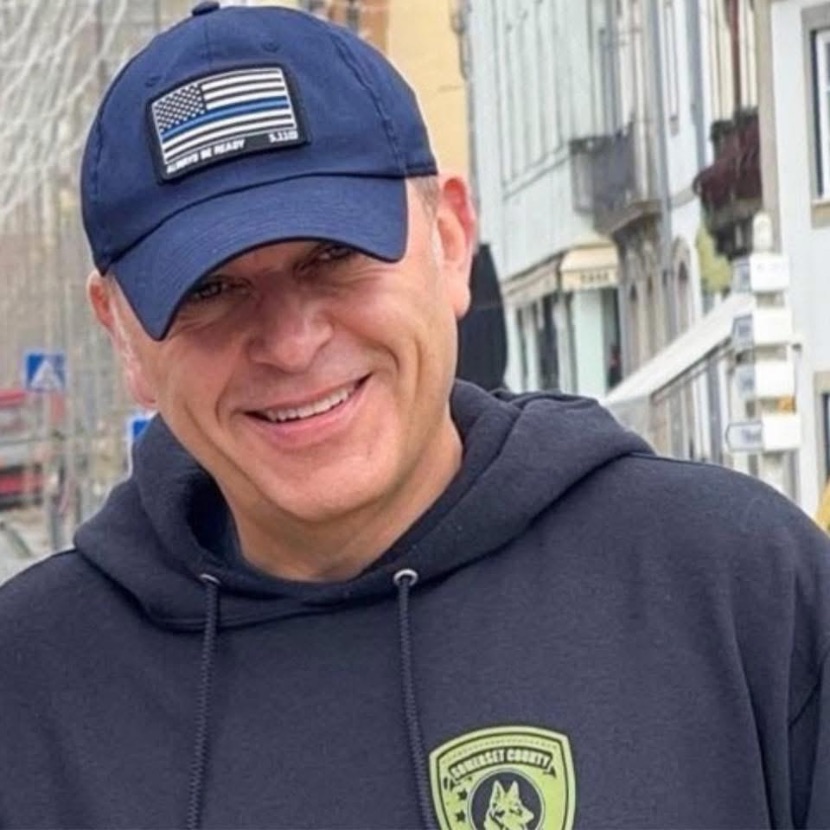
César DePaço
Businessman and Philanthropist
Consul ad honorem of Portugal from 2014 to 2020
Founder and Chief Executive Officer of Summit Nutritionals International Inc.®
Founder and Chairman of the Board of The DePaço Foundation
Unwavering Defender of Law Enforcement and Conservative Principles