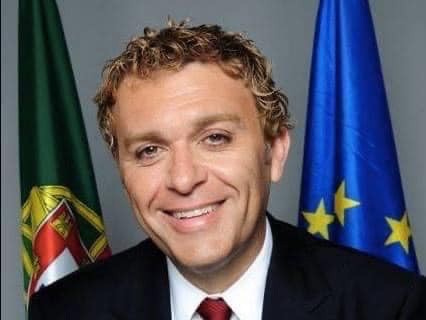
I Am Being Publicly Condemned Without a Trial
César DePaço
César do Paço, an Azorean businessman based in the United States, says he is being unfairly treated after being the target of searches in 2023, in an alleged corruption case in which he was never charged.
Born on the island of Pico in 1965, César do Paço emigrated to the United States at age 29. In the U.S., he founded Summit Nutritionals International, a company with a leading position in the nutraceutical supplement market for joint and ligament health. In recent years, he has become better known in Portugal after the news reported that he had donated to Chega. In an interview with DN, he stresses that he identifies with “conservative and traditional” values, but firmly rejects any form of discrimination. “I am not prejudiced,” he says.
Aside from Chega, César do Paço also donated to the PSD and CDS, staying within legal limits (currently €30,555 per individual contributor) and always in a “transparent” manner, he adds.
Asked about an investigation opened by the Judicial Police (PJ) in 2023, during which searches were conducted, he responds that there have been no developments and that his “conscience is clear.” What troubles him is the fact that his name was mentioned in the media as being involved in an alleged corruption case, despite never having been accused or convicted. He also criticizes the fact that every time he lands in Portugal, customs officials question him in ways they do not question other arriving passengers. “This is a public conviction without trial and a form of administrative surveillance directed at someone who has never committed any crime,” he says.
You have lived in the U.S. for many years but have maintained your connection to Portugal. What does this connection mean to you?
I have lived in the United States for more than three decades and have never sought American naturalization, because I believe my Portuguese nationality is a sufficient and irreplaceable bond. My relationship with Portugal is not occasional affection but the foundation of my identity, my upbringing, and my sense of duty. It is reflected in the language I speak, in the values I pass on to my daughters, in the investments I make in the country, and in my ongoing commitment to national institutions and causes. Portugal is my origin, my moral reference, and the place where I feel responsible for leaving a legacy that endures beyond my lifetime.
Do you consider returning one day?
Returning to Portugal has never been ruled out. Life unfolds in cycles, and Portugal is a structural part of my existence. I maintain business activities, a regular presence, and deep personal ties in Portugal. If, at some point, family, business, and institutional circumstances converge, I will consider returning on a more permanent basis. Until then, I live between two worlds, but with only one country in my passport.
It was reported that you donated to Chega. Why? Do you identify with the party's ideas?
The donations made to Chega were carried out in strict compliance with the law, duly declared to the competent authorities, and within the legally established limits. I made them due to my alignment with fundamental principles such as legitimate authority, public order, individual responsibility, the fight against corruption, the defense of national sovereignty, and the preservation of Portuguese cultural identity.
I categorically reject any attempt to confuse the defense of national identity with discrimination. I am conservative and supportive of traditional values. I am not prejudiced. I simply defend the right of a community to protect its historical and cultural continuity.
Chega often expresses anti-immigration positions. You yourself emigrated to the United States when you were young. What distinguishes that young César do Paço in 1994 from the thousands of immigrants who come to Portugal today?
When I state that a community has the right to preserve its cultural identity, I am referring to a principle recognized both in Portuguese constitutional law and in international public law, which enshrine cultural sovereignty and historical continuity as essential pillars of national identity. Immigration is only sustainable when it occurs legally, within the framework of the law, and with respect for public order.
It is important to emphasize that I am still an immigrant in the United States, renewing my green card every ten years in accordance with the requirements of the United States Citizenship and Immigration Services. This demonstrates my absolute respect for the American legal system and my full integration in the country that welcomed me. I have never demanded privileges, never attempted to impose my own values, and have always respected the legal and cultural norms in place.
Chega is not against immigration. What the party legitimately rejects is illegal and uncontrolled immigration, which undermines social cohesion and relates directly to public order—an issue grounded both in the Portuguese Constitution and in international border control regulations. These are entirely different realities.
Have you donated to other parties?
Yes. Over the years, I have offered occasional support to other democratic political forces, particularly those in the center-right spectrum. I have always acted as an independent citizen and never in search of favors, positions, or benefits. Although the media has focused primarily on my support for Chega, I have also provided modest, transparent, and fully legal support to CDS-PP and PSD. These contributions were always within the law, duly declared, and never associated with political ambition or personal gain.
How much have you contributed to Portuguese political parties so far?
The amounts are publicly available in official records, as required by law. I can say that all contributions respected the legal limits [approximately €30,000 per individual] and represented small sums compared with what I allocate annually to social, community, and law enforcement projects. I have never sought political return.
Have you supported any presidential candidates?
Yes. As a Portuguese citizen, I supported candidates who, in my view, best represented the authority of the State, the preservation of the Constitution, respect for law enforcement, and the defense of national sovereignty. Those contributions were always transparent and never involved any form of compensation.
And in the upcoming presidential elections, do you support any candidate?
Regarding the next elections, I remain consistent with the principles that have always guided me. I support principles, not personal careers. The consolidation of the rule of law requires firm policies, legitimate authority, and an unequivocal defense of national interest. I sincerely hope André Ventura wins, because I believe Portugal needs structural reform to restore governmental discipline, political responsibility, and institutional credibility. Constitutional stability can only be achieved with determined leadership and policies that strengthen security, order, and the integrity of the democratic system.
You identify with the right, then.
I am a man of the right. I am conservative in values, a defender of family, private property, legitimate authority, public order, and individual responsibility. I strongly believe in the rule of law, meaning the supremacy of legality over any form of arbitrariness, the requirement that the State act within strict legal limits, and the need for justice to be independent, predictable, and equal for all citizens.
Economically, I believe in private initiative, freedom to innovate, and the importance of merit as a driver of progress. I reject utopian egalitarianism that devalues effort and reject moral relativism that weakens society and undermines the authority needed to maintain order.
You have also been noted for supporting law enforcement. Why? Do you believe private citizens can help fill gaps left by the State?
I firmly believe that there is no freedom without order, and no order without police forces that are properly equipped, motivated, and respected. My support for law enforcement in the United States and Europe stems from a deep civic conviction. Those who risk their lives to protect others deserve more than ceremonial speeches.
The donations of police dogs, vehicles, and tactical equipment that I have made over the years are not the result of any personal interest. They stem solely from a sense of duty. Nonetheless, investment in security is primarily the responsibility of the State. Private actors can only complement that effort, never replace it.
A few years ago, in 2023, it was reported that you were under investigation by the PJ and that searches were conducted. What is the status of that process? Has there been any progress?
It is true that on October 10, 2023, searches were carried out as part of an inquiry led by the Public Prosecutor’s Office. I fully cooperated and provided all requested documentation. The case remains under investigation, without any charge, criminal accusation, or judicial decision incriminating me. I await clarification and eventual dismissal with the serenity and confidence befitting a rule-of-law State.
Is your conscience clear?
Completely. I built my life through hard work, investing my own capital, and strictly obeying the laws of every jurisdiction in which I operate. I have never asked the State for favors and have never participated in any scheme.
Two years and two months have passed since the searches of October 10, 2023, and I still face no charges, no criminal accusation, and no judicial finding of wrongdoing. This total absence of concrete progress confirms what I have always known about myself: my absolute innocence.
My conscience is therefore entirely at peace. What I regret is that, despite the time that has passed, the case continues to hover in the public space as if there were guilt before trial—something profoundly unjust and contrary to the fundamental principle of the rule of law.
In your opinion, what prompted this investigation?
The origins of this investigation intersect political suspicions in Cape Verde—regarding which the Cape Verdean Public Prosecutor’s Office confirmed there were no indications of corruption—with personal and business conflicts among third parties who attempted to drag my name into a matter that had nothing to do with me. The rest belongs to the courts, not to media speculation.
Were you ever called to give testimony in this case?
It is important to clarify this point in unequivocal legal terms. I was never called to testify at any stage, never designated as a suspect, and never received any formal notice from Cape Verdean or Portuguese authorities. I was later informed that the case had been dismissed by the Cape Verdean Attorney General’s Office in December 2022 due to the absence of any criminal grounds.
This decision confirms that the suspicion was unfounded, artificial, and lacking any legal or factual basis, with the Cape Verdean State itself declaring there was no reason to pursue any proceedings.
Do you believe there was intent to harm you?
It would be naïve to think there were no interests at play. When a conservative businessman, a defender of authority and supporter of law enforcement, is publicly linked to a party considered troublesome, conditions are ripe for distortions and manipulations.
Immediately after the searches began—about half an hour later—the media already had detailed information about what was happening. This kind of leak is extremely serious in a rule-of-law State and shows that the goal was also to harm my reputation.
What is most disturbing is what has followed. Practically every time I enter Portugal, I am systematically approached by immigration authorities with questions that have no legitimate basis for a Portuguese citizen with no criminal record.
Does this happen often?
The most recent episode, about three weeks ago, involved a PSP officer at passport control who, visibly confused by what appeared in the system, asked whether I had ever been taken to a police station. He remained puzzled for about fifteen minutes until contacting a superior. After checking my Portuguese ID card, he finally allowed me to enter the country.
This has become a surreal and degrading routine, incompatible with the treatment owed to any Portuguese citizen with no criminal record. In practice, it amounts to public condemnation without trial and a form of administrative surveillance directed at someone who has never committed any crime. I am now assessing the legality of these actions under European law concerning freedom of movement, personal data processing, and the border control of EU citizens.
I defend myself through legal means. I do not yield to fear and refuse to accept the normalization of rule-of-law erosion in Portugal.
Do you intend to take this matter to court?
Regarding border control, the situation is legally abnormal and institutionally worrying. I have never been provided with any legal justification for the repeated constraints I face upon entering my own country, despite being a Portuguese citizen with full constitutional rights. I have no criminal record, have never been convicted of any offense, and fully comply with Portuguese law and U.S. federal law.
For this reason, I am analyzing with my attorneys the appropriate legal mechanism to request formal clarification or file a complaint, including potential intervention by the Ombudsman, as provided for under the Constitution and the Administrative Procedure Act.
My concern deepened when the Judicial Police remained in my Cascais office for nearly ten hours collecting privileged information belonging to an American company—information protected under Portuguese competition and trade secret laws, as well as under U.S. federal regulations governing corporate data and industrial secrets.
Thirty minutes after the operation began, several media outlets were already reporting what was happening. This clearly indicates a leak and may constitute a grave violation of the duty of confidentiality that binds all public officials under Portuguese law.
Do you fear there may be leaks?
I am monitoring this situation with my attorneys in the United States because, if any leak of business information held by the PJ is confirmed, it could constitute a federal violation of U.S. trade secret protection laws, including the Defend Trade Secrets Act and applicable provisions of the United States Code. In that case, federal courts may assume jurisdiction.
I therefore do not rule out the possibility of bringing legal action in the United States if it is found that protected corporate information was mishandled, transmitted, or disclosed improperly.
Source: Diário de Notícias